Ormond Beach gives anglers access to river, flats, and inshore fishing without making an offshore run the default plan. Artificial lure fishing charters can help you work the Halifax River, Tomoka River, and nearby waters with a guide who adjusts the presentation to the day.
Local conditions shape where you fish and how you cast. A guide can help you match a lure presentation to water depth, current, and fish activity, which can make a new technique easier to learn.
Key Takeaways
- Local trips commonly focus on rivers, flats, and inshore water.
- Confirm that the trip listing allows artificial lures.
- Choose the water type that fits your fishing goal.
- Ask how much casting instruction the guide provides.
- Compare the trip’s duration, passenger capacity, and included tackle.
Compare the water type and the kind of instruction you want before choosing a trip.
What Do Artificial Lure Fishing Charters in Ormond Beach Include?
Local lure trips usually focus on inshore, river, and flats water, where anglers cast light tackle rather than depend on a long offshore run. Sight casting means spotting a fish and presenting a lure directly to it before it moves away.
Artificial lure fishing prompts a strike through the lure’s presentation rather than relying on live bait. On a typical fishing charter, you can expect to cast and work a lure while the guide helps you read the water and adjust your approach.
Light tackle lets you cast smaller lures and feel how they move through the water. The guide may point out current seams, shallow edges, or other places worth working, then help you respond to what happens after each cast.
Ask whether the guide offers live bait if conditions make lures difficult to fish effectively.
That option can matter when fish are not responding to an artificial presentation or when the day’s conditions make casting harder. Live bait is not the same experience as fishing artificial lures, so clarify what the trip will focus on.
Techniques vary with the water and the guide’s plan. You might cast across a shoreline, work a lure over open flats, or try sight casting when a fish appears within range.
Ask the guide whether instruction is included if you want to learn a new casting or retrieve technique during the trip.
Where Do Ormond Beach Charters Fish?
The Halifax River and Tomoka River system are the clearest local starting points for inshore fishing. River water offers a different trip feel from shallow flats, so the setting can help you choose what kind of day you want.
The Halifax River and Tomoka River system offer inshore fishing opportunities around Ormond Beach. The nearby Gulf Stream is about 40 miles offshore, making it a separate, longer-range consideration rather than the default expectation for a local inshore trip.
| Water | Local opportunity | Practical fit |
|---|---|---|
| Halifax River | Inshore fishing opportunity | River-style trip |
| Tomoka River system | Inshore fishing opportunity | River-style trip |
| Flats | Flats fishing opportunity | A setting suited to sight casting |
Each setting gives you a different way to spend time on the water. River trips stay focused on a river-style area, while a flats outing centers on shallower, more open water.
The practical fit matters if you have a specific fishing style in mind. Flats can suit anglers interested in sight casting, while river water provides a distinct setting for inshore fishing.
The Gulf Stream’s offshore distance changes the scale of a trip compared with local river and flats fishing. It should not be assumed that an Ormond Beach inshore outing includes a run that far from shore.
If offshore water is your goal, confirm the route and expected travel time with the guide before booking.
Which Fish Can You Target Around Ormond Beach?
Redfish, black drum, flounder, snook, and speckled trout are the most useful starting points when choosing a local target. These species are among the commonly sought-after fish around Ormond Beach.
A target list helps you describe a goal, but it cannot guarantee a catch. Conditions and the trip’s chosen water affect which fish you may encounter, so treat a species preference as a starting point for a conversation with your guide.
Other listed targets include tarpon, bluefish, jack crevalle, and mangrove snapper. Those fish broaden the range of possibilities, but their presence should not be assumed on every outing.
Daytona-area inshore trips provide a wider local picture. Around the Halifax River and Ponce Inlet, anglers target redfish, spotted sea trout, mangrove snapper, flounder, black drum, snook, and tarpon.
Speckled trout and spotted sea trout are names often used for the same general fish. A guide may use either term when discussing the local target range, so ask what the trip is expected to focus on.
Think about what would make the outing satisfying even if your first-choice fish does not show. You might prefer a particular style of water or a chance to practice a technique, rather than making the day depend on one species.
Tell the guide your first-choice species and ask which local setting best suits that goal.
Which Lures and Techniques Work in Local Water?
Start with the lure’s depth and action, then adjust its color to the water and light. The right presentation depends on what the lure needs to do, not simply which color looks appealing.
Match lure depth to the water you are fishing before changing colors or styles. Depth, cover, forage, and retrieve are useful checks when choosing an artificial lure fishing approach.

Match the Lure Style to the Situation
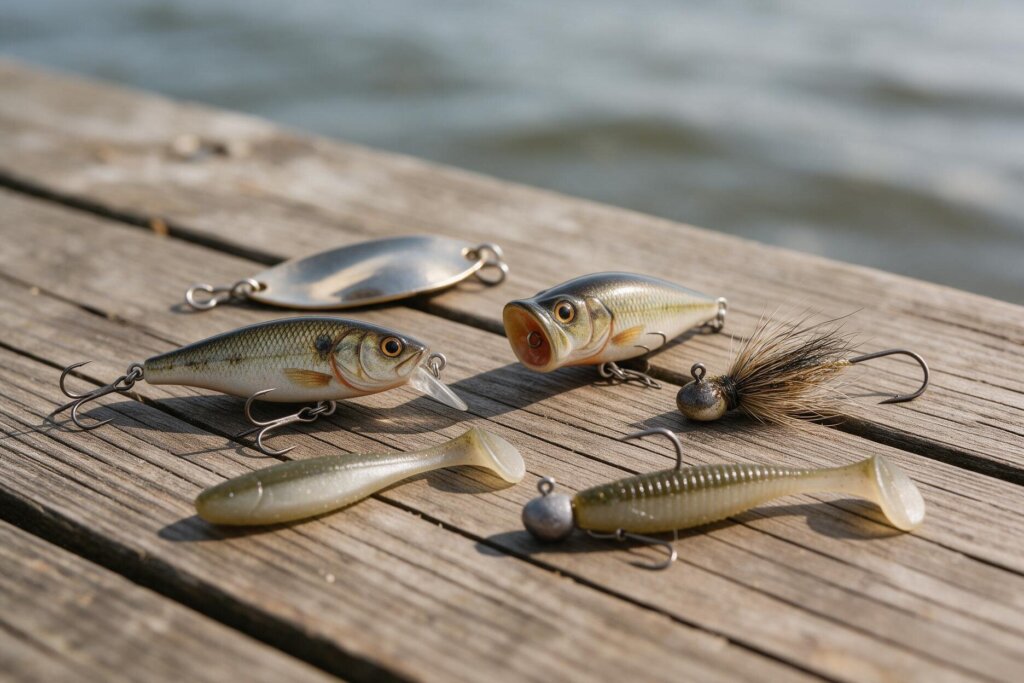
Spoons flash like baitfish and can cover water with varied retrieves. A steady retrieve searches a broad area, while a change in pace gives the lure a different action.
Topwater lures work at the surface, and calmer conditions can make that presentation easier to manage. Minnow baits can be retrieved straight or worked with a twitch-pause action that gives the lure brief changes in movement.
Twitch baits also depend on controlled rod movements to create an irregular action. Pick a style that suits the depth and cover, then give it enough casts to see how fish respond.
Adjust the Retrieve and Casting Angle
Use colors that remain visible in the day’s light and water conditions. A lure that is easy to see can help you track the presentation, especially when casting near cover or working shallow water.
Vary the cast angle, distance, and retrieve speed to find a repeatable pattern. When a fish ignores a presentation, change one part at a time so you can tell whether the adjustment helped.
- Depth: Does the lure reach the part of the water you want to fish?
- Cover: Can you work it around the structure or vegetation?
- Forage: Does its size and movement resemble available bait?
- Retrieve: Can you work it at a speed that suits the conditions?
A common mistake is changing lure color repeatedly without first testing retrieve and depth. That can leave the more important parts of the presentation untested.
If a fish follows but does not strike, pause or alter the retrieve before switching to a completely different lure.
How Do You Compare Ormond Beach Charter Options?
The strongest fit for a typical Ormond Beach lure angler is a trip listing that names the preferred water and clearly allows artificial lures. That detail helps separate a lure fishing charter from options that may center on another style.
Ormond Beach listings include 84 fishing trips. One example, the Artificial Lures River Style trip, is listed from $379 for 1-2 people on a 21-foot boat.
Read the Trip Listing for the Details That Matter
The example describes one listing, not every local fishing charter. Compare its starting price and boat details with the trip duration, passenger capacity, included tackle, target species, and cancellation terms.
Those details can change how well an option fits your group. A listing that allows lure fishing may still differ in its planned water, length of trip, or equipment supplied.
Artificial lure fishing charters in Florida cover different saltwater settings, while Ormond Beach options commonly focus on inshore, river, and flats water. That makes the local water type an important part of comparing an area-wide search with a specific trip.
Choose a Trip That Fits Your Fishing Goal
For the best artificial lure fishing charters, prioritize a river or inshore option that explicitly allows lures if you want typical local artificial-lure action. Choose a flats trip if sight casting is your main goal.
Read the trip listing closely instead of relying on a title alone. Check what the guide plans to fish, whether artificial lures are welcome, and whether the listed passenger limit suits your group.
Think about the kind of experience you want from the day. A focused lure fishing charter may suit you better than an option with a broader approach, even if both fish nearby water.
Confirm the final price and trip terms on the specific listing before you reserve.
When Is the Best Time to Book an Ormond Beach Fishing Charter?
Summer is Ormond Beach’s most popular charter season, and anglers book an average of 26 days ahead. That lead time gives you a practical starting point when choosing dates during the busiest period.
Summer draws the most charter bookings, with an average booking lead time of 26 days. Seasonal fishing opportunities also shift during the year, so your preferred target may affect which dates you consider.

Winter brings sheepshead as a popular Daytona-area inshore catch. If that fish is your priority, tell the guide when you are planning to go and ask what water they expect to fish.
Each autumn, big redfish enter the Halifax River at Ponce Inlet during the October redfish run. That seasonal movement makes the area a notable choice for anglers interested in redfish during that period.
Snook and tarpon also receive special attention at Ponce Inlet in September and October. These seasonal opportunities give you useful context, but they do not promise a particular catch on a given day.
For a specific target, leave room in your plans for the guide’s assessment of local conditions. The same broad season can offer different fishing depending on the water selected and the day’s circumstances.
If your schedule is fixed, share the dates when you contact a guide. That lets you compare your timing with the guide’s planned water and the seasonal fishing you hope to experience.
For a specific seasonal target, ask the guide which dates and local water are the best match before selecting a trip.
Do You Need a Florida Saltwater Fishing License?
Passengers authorized to fish under a Florida charter or headboat vessel license do not need individual recreational saltwater licenses for that fishing. The key condition is that you must be covered as a passenger authorized under the vessel’s license.
Florida state saltwater waters extend 3 miles offshore in the Atlantic and 9 miles in the Gulf. Federal regulations apply beyond those respective distances.
The state-to-federal boundary matters because the rules that apply can change with the fishing area. A trip planned close to shore and one that crosses a boundary may require different checks.
Confirm the vessel’s license coverage with the charter operator before fishing. You can also check applicable rules with the relevant authority, especially when the planned route crosses from state into federal waters.
Do not assume that every person aboard is covered simply because the boat has a license. The vessel license applies to passengers authorized to fish under it, so confirm that your group falls within its coverage.
Ask about the planned fishing area as well as the license. Knowing whether the trip stays within state waters or reaches beyond them helps you understand which regulations may apply.
Confirm the vessel’s license coverage and the planned fishing area with the operator before departure.
How Do You Choose a Guide for Your Skill Level?
Choose a guide who can explain the fishing approach at the level of detail you want. Good instruction can help you get more from the trip, whether you are learning to cast or already have experience.
Inshore charters commonly run about 4-6 hours, while full-day trips commonly last about 8 hours. The exact schedule depends on the operator, so match the trip length to your group’s needs.

If You Are New to Artificial Lures
Ask whether the guide offers casting instruction and how much hands-on help you can expect. A guide who explains the fishing plan clearly can help you feel more comfortable trying a new technique.
If a kid is joining, ask whether the trip suits children and what age guidance the operator uses. Consider how long the child can stay engaged on the water, not just whether they enjoy fishing.
If You Already Have Casting Experience
Confirm the target species and preferred technique before booking. Ask how much time the guide expects to spend moving between spots, since travel affects how the day is divided.
| Angler situation | Question to ask | Useful detail to confirm |
|---|---|---|
| New to lures | Will you coach casting and retrieves? | Instruction and tackle are confirmed |
| Experienced caster | Can we focus on a chosen technique or species? | Target and water type are confirmed |
| Family with a child | Is the trip appropriate for a child? | Age guidance and trip length are confirmed |
Before choosing, use this short checklist to cover details that shape your time on the boat:
- Ask about the guide’s experience with your chosen technique.
- Confirm which gear the trip includes.
- Check the cancellation and weather terms.
Match the trip duration to the group’s stamina, especially when a child is joining.
A realistic trip length can help everyone stay comfortable and interested. Match the trip duration to the group’s stamina, especially when a child is joining.
What Gear Should You Bring for Artificial Lure Fishing?
Ask what tackle is included before packing rods or buying lures for the trip. Many charters may provide gear, but the operator can tell you what is supplied for your specific outing.
A 7-foot medium-light to medium spinning rod is a common inshore starting point. Typical general-purpose braided line ranges from 10-20 lb, with cover, current, and fish size affecting the choice.
Ask whether rods, reels, tackle, and artificial lures are supplied before bringing your own. The following are general starting points, not required charter equipment.
| Setup | Typical rod and line | General fit |
|---|---|---|
| Lighter inshore setup | 7-foot medium-light spinning rod, 10 lb braid | Lighter lures and less cover |
| General inshore setup | 7-foot medium spinning rod, 10-20 lb braid | A broad starting point for local fishing |
| Heavier inshore setup | Medium spinning rod with stronger line as needed | More current, cover, or larger fish |
Personal items can make a long spell in the sun more comfortable, even when the guide supplies the fishing tackle.
- Polarized sunglasses
- Sun protection
- Water
- Comfortable, non-slip footwear
Follow the guide’s equipment advice when local current, cover, or target size calls for a different setup.
That advice can help you avoid bringing gear that does not fit the planned fishing. Follow the guide’s equipment advice when local current, cover, or target size calls for a different setup.
Conclusion
A good Ormond Beach charter choice starts with the water you want to fish and the kind of lure fishing you want to learn or practice. Your goal can help narrow the local options to a trip that suits your group and experience.
Compare current Ormond Beach listings, then contact the guide to confirm dates, trip terms, and included tackle. That conversation can clear up details that affect your plans before you commit.
Choose the listing that fits your group, confirm the details with the guide, and reserve your preferred date.
FAQ
Can a beginner catch fish using artificial lures on a charter?
Yes, a beginner can catch fish using artificial lures on a charter, and a guide can coach your casting and retrieve. Ask before booking how much hands-on instruction is included, since teaching styles differ. You can also tell the guide what you have tried before, which helps them choose a useful starting point for the day.
Are artificial lures better than live bait for Ormond Beach fishing?
Artificial lures are useful for active casting and sight fishing, but they are not always better than live bait. Fish response and conditions can affect which approach works well on a given day. Ask whether the guide offers live bait as an alternative if you want that option available during your trip.
Can an Ormond Beach charter reach the Gulf Stream?
Yes, an Ormond Beach charter can be planned for the Gulf Stream, which is about 40 miles offshore. That distance makes the trip a separate, longer-range plan from a local inshore outing. Confirm with the guide whether the specific boat and trip plan cover that run, including the route and expected travel time.
What is the difference between river fishing and flats fishing?
River fishing takes place in a river setting, such as the Halifax River or Tomoka River system. Flats fishing focuses on shallow, open water, where sight casting can be used when a fish is visible. Your choice comes down to the kind of water and fishing style you want for the outing.
What should I ask before booking an artificial-lure trip?
Ask about the target species, water type, included tackle, trip length, passenger capacity, and cancellation terms. These details show whether the trip fits your group and fishing goal. Confirm that the listing allows artificial lures, too, so the guide’s planned approach matches what you want to do on the water.
Do I need to bring my own artificial lures on a guided trip?
No, you do not necessarily need to bring your own artificial lures on a guided trip. Ask the operator what tackle is supplied, since some trips may include the lures and gear you need. Bring your own only if the guide confirms they are useful or welcome for the planned fishing.
Contact Us
We would love to hear from you! Please fill out this form and we will get in touch with you shortly.